Understanding Your Home’s Main Water Shut-Off Valve
When a plumbing emergency strikes—whether it’s a burst pipe, a washer hose leak, or a toilet running nonstop—you have mere minutes to act before serious water damage occurs. In these moments of panic, one simple action can save you thousands of dollars in repairs: turning off your home's main water supply.
Yet, for many homeowners, the main water shut-off valve remains a mysterious, often hidden device. At Jim Dandy Sewer & Plumbing, we consider this valve to be the single most important component of your home's plumbing system. Here is our essential guide to locating, operating, and maintaining this vital safety feature.
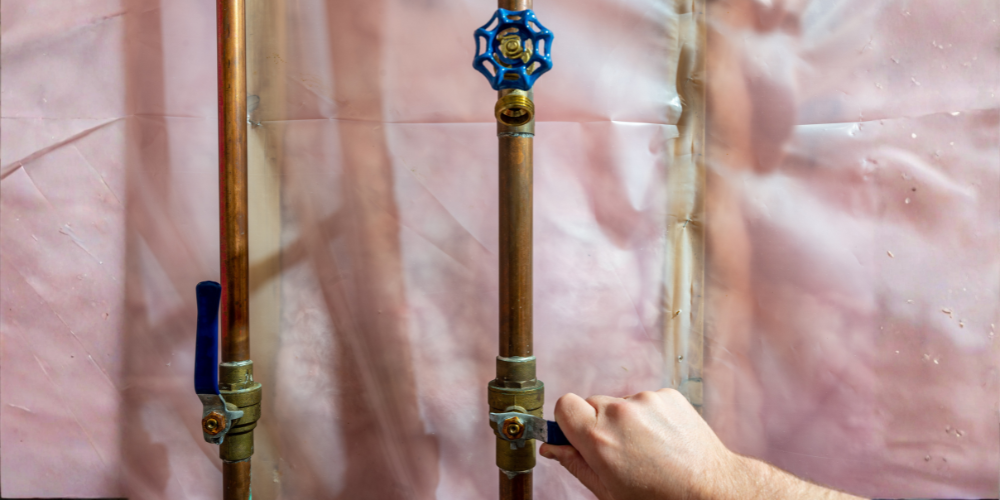
Where to Find the Most Important Valve in Your Home
Every minute counts during a water emergency, so you need to know exactly where your valve is before you need it. The location typically depends on the age and type of your Seattle-area home:
In the Basement or Utility Closet: For many homes with basements, the valve is located near the front of the house, where the water line enters. Look for a thick pipe coming out of the concrete floor or wall.
Near the Water Heater or Furnace: In homes without basements, the valve is often in the utility area, garage, or sometimes under the kitchen sink.
The External Curb Stop: There is a secondary shut-off valve located outside your home, usually near the street or sidewalk under a small metal or concrete cover (sometimes labeled "Water"). Homeowners should generally not attempt to operate this valve, as it requires a special tool and is technically the property of the water utility.
Action Item: Go find your valve right now! Once you locate it, ensure everyone in your household knows where it is.
Identifying the Two Main Valve Types
The way you turn off the water depends entirely on the type of valve you have:
1. Ball Valve (The Modern Type)
This is the easier and faster valve to operate.
Appearance: It has a lever handle that is parallel to the pipe when the water is ON.
Operation: To shut off the water, turn the lever a quarter-turn (90 degrees) until it is perpendicular (at a right angle) to the pipe.
2. Gate Valve (The Older Type)
Often found in older Seattle homes, these can be more problematic.
Appearance: It has a round, wheel-like handle.
Operation: To shut off the water, you must turn the wheel clockwise for several full rotations until it is tightly sealed.
Caution: Gate valves are prone to seizing up, and turning them too forcefully can cause the stem to break, leaving the water supply stuck in the ON position.
Practice Makes Perfect (and Prevents Disasters)
Once you've located your valve, it's crucial to test it periodically. Valves that go untouched for years can become corroded or frozen in position.
Testing a Ball Valve: Turn it a quarter-turn, confirm the water flow stops (e.g., by checking a running faucet), and then turn it back on.
Testing a Gate Valve: Turn it just a half-turn clockwise, then turn it back. If it feels stiff, do not force it. Forcing a stuck gate valve can cause it to break.
If your valve is old, corroded, or you have a gate valve that you cannot turn easily, we strongly recommend having a professional plumber replace it with a modern, reliable ball valve. This simple preventative measure is the best insurance you can buy against water damage.
Don't Wait for an Emergency—Secure Your Valve Today
Knowing where and how to shut off your water is the first step in plumbing preparedness. If you are unsure about the condition of your main shut-off valve, if it’s rusted, or if you can’t find it, the Jim Dandy team is ready to help you locate and service it.
A functioning, easy-to-use main water shut-off valve is peace of mind. Contact us today to schedule a home plumbing inspection and valve maintenance service! We’ll ensure you’re ready for any unexpected plumbing emergency.